














|
Click here to become a new member of myADHD.com and join
See this month's free myADHD.com tools below. Scroll down to Featured Tools on anger management for children.
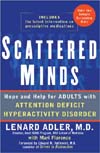
Free Teleconference—Assessment and Treatment of ADHD in Adults featuring Lenard Adler, MD, Associate Professor of Psychiatry and Neurology, NYU Medical Center and co-author of newly published book, Scattered Minds. Wednesday, May 10, 2006, 8:30 -9:30 pm. Click here to sign up. We are pleased to continue our column, Medical Practice Updates by Richard Rubin, MD. Each month Dr. Rubin will discuss recent findings in the treatment of ADHD that will impact practitioners. At a recent ADHD Curriculum Development Workshop sponsored by Johns Hopkins University Continuing Medical Education, Dr. Rubin proposed a change in the practice of drug holidays based on recent study results and newer medicine attributes. A "holiday" implies desire or need to get away from unpleasant or arduous circumstances. This practice came about from the days when the usual ADHD treatment was short acting stimulant control of disruptive school behavior. Medicine holidays were done when school was out, to "let boys be boys", and for relief of appetite and personality suppression side effects. However, modern studies like the NIMH Multi-Modality Treatment of ADHD show that continuous, not intermittent, medicine treatment has better behavioral outcome. We have also learned to recognize the need for treatment of ADHD symptom consequences and risks outside school settings. In addition, since poor compliance with medicine use frequently compromises benefit, fostering holidays in our practice procedures may encourage inappropriate lapses in treatment. A more modern practice would be continuous treatment that includes monitoring for specific circumstances requiring medicine re-evaluation. Such planned medicine discontinuations should be done under the prescribing physician's supervision. For example, while the vast majority of children do fine with extended stimulant use, those having weight loss or growth velocity decrease require review of the medicine choice. Changing the medicine could be better than discontinuation with loss of all treatment benefit. We now have options of medicines with less growth concern to consider. Alternatives are also available for patient and parent dissatisfaction with personality suppression effects. Other reasons for medically supervised re-evaluation include signs of combined mental health disorder occurrence, medical illness coincidence, ADHD changes at key developmental stages, and adapting medicine effects to an individual's changing life situation needs. Dr. Rubin practices Child and Adult Psychiatry, directs The Clinical Study Center in Burlington Vermont, and serves as Clinical Associate Professor at the University of Vermont College of Medicine. Click here for more information about Dr. Rubin and ADHD.
The study was published in the September 2005 issue of the American Journal of Psychiatry. Medication and Alcohol Don't Mix The study was led by Kennerly S. Patrick, Ph.D., professor of pharmaceutical sciences at the university. It was presented at the annual meeting of the American College of Clinical Pharmacology.
May's Featured myADHD.com's Tools Visit myADHD.com today. myADHD.com online library: www.myadhd.com/librarytools.html A.D.D. WareHouse See our special sales for May 2006. www.addwarehouse.com To sign up for a live conference on ADHD visitwww.addconsults.com CHADD www.chadd.org Attention Deficit Disorder Association (ADDA) www.add.org Subscribe to Attention Research Updates for a free newsletter.
|
|||||||||||||||||||
 |